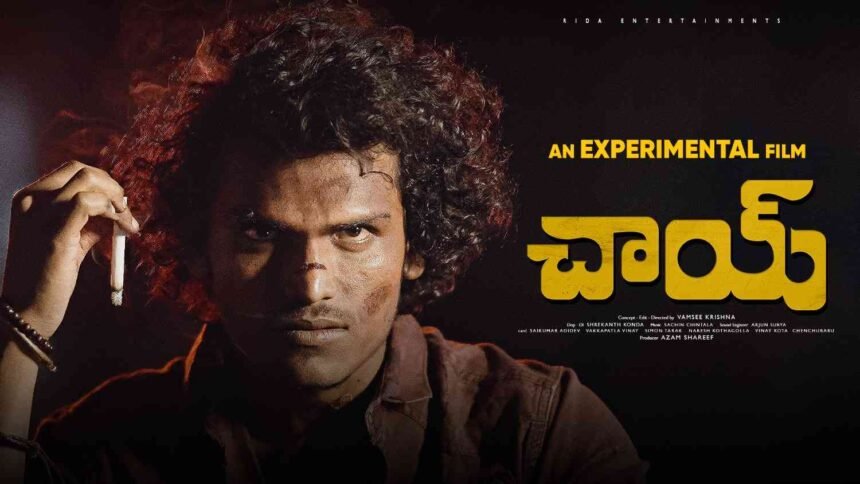
In a time when global filmmaking often equates ambition with scale—long runtimes, expansive casts, and elaborate visual effects—a short suspense film like CHAI emerges as a quiet revolution. Directed and edited with surgical precision by Vamsee Krishna, the film has not only risen to third place in viewer rankings this week but also sparked conversations that go beyond cinema. It serves as a reminder that profound impact in storytelling does not come from size, but from intent.
The film’s very economy—its brevity of length, minimal use of dialogue, and uncluttered visual language—becomes its greatest asset. Every frame is purposeful, every cut a carefully designed beat in the rhythm of suspense. At its core, CHAI is not about what happens, but why it happens and what it says about consequence, morality, and the invisible law of karma. In small sips, just like its title, the film intoxicates the viewer with a concentrated taste of fate.
Whether consciously or not, Krishna leans into the ancient Indian storytelling tradition where brevity has always been used to heighten power. Just as a haiku can carry the weight of a lifetime, or a moral parable can reshape an individual’s journey, CHAI delivers a complex story in a short form that lingers in the memory.
Saikumar Adidev: The Stillness of Panic
In suspense filmmaking, performance is often about contradictions. The audience must feel that a character is simultaneously trying to remain in control while betraying the cracks of fear beneath the surface. Actor Saikumar Adidev delivers exactly this balance. His portrayal avoids the loud histrionics often mistaken for tension. Instead, he finds power in stillness, in understatement, in micro-expressions that slowly unravel a man’s interior battle.
What makes Adidev’s work stand out is the conviction with which he believes in the stakes. Every movement of his eye, every shift in breathing carries weight because, for him, the fiction is real. The unease projected through his performance is contagious; the audience feels it, not because of tricks, but because the actor treats each gesture as inevitable. When paired with Vinay Kumar, Simon Tarak, and the ensemble, the chemistry heightens the believability, anchoring the short’s intensity in recognizably human reactions.
In many ways, this is the central principle of suspense: the believability of fear. Without it, no score, no camera movement, no editing choice can save a film. CHAI nails this essential pillar through performers who embody rather than enact. For indie actors and aspiring filmmakers across India, Adidev’s performance is a case study in how restraint can be exponentially more powerful than excess.
Technical Precision: Minimalism as Mastery
A suspense film is a tightrope. One step too far in sound design, and it risks melodrama. One visual gimmick too many, and the illusion collapses. This is why the technical choices in CHAI feel all the more remarkable. Shreekanth Konda’s cinematography is both claustrophobic and liberating. By compressing frames, restricting space, and playing with shadows, Konda forces the viewer into a corner, mimicking the protagonist’s tightening situation. But within that closed frame, he also finds movement, angles, and rhythms that resist monotony.
Meanwhile, Sachin Nani’s score demonstrates the art of restraint. The less you hear, the more you imagine. Rather than weighing scenes with heavy musical cues, the score stretches silence, using carefully timed notes to elongate time and plant an unsettling anticipation. This spareness allows the sound design—echoes, rustles, creaks—to do much of the heavy lifting, ensuring nothing is wasted.
Most of all, Krishna’s editing proves the film’s defining feature. Not a second is extraneous. Suspense lives in escalation, and this escalation demands cuts that are precise, just sharp enough to jolt but never disruptive enough to take the audience out of the story.
Here, the lesson for aspiring editors and directors is golden: short films succeed not by imitating the structures of feature-length films, but by respecting their own brevity as a separate form.
Karma and Morality as Story Drivers
Beyond craft, what truly elevates CHAI is its thematic commitment to karma. Unlike Western thrillers that often lean on randomness or chaos to create suspense, the engine of this story is consequence. The film taps into an idea engraved in Indian consciousness for centuries: what you sow, you reap.
By transforming karma into a narrative device, Krishna shapes suspense not as a gimmick, but as a natural moral reckoning. The unease grows not because something external might disrupt the protagonist’s life, but because his own actions invite the disruption. Every twist, every escalation feels earned—the film’s universe responds logically, morally, inevitably.
This subtle layer is what makes the film linger long after watching. The fear is not of the unknown; the fear is of the known that has been ignored. It makes the viewer examine not just the character, but themselves. In community forums, audiences have confessed that CHAI made them “think twice” about small decisions, about moral shortcuts, about the butterfly effect of choice. That is storytelling at its highest calling—when fiction becomes a mirror.
Community Conversations and Indie Echoes
What distinguishes the success of CHAI from other viral shorts is its conversation footprint. On platforms like Filminity, discussions among cinephiles, aspiring filmmakers, and even general viewers reveal a rare kind of satisfaction—one rooted not only in entertainment, but in reflection.
This ripple effect is especially critical for indie cinema in India today. As OTT platforms encourage mass production of content, the temptation for filmmakers is to prioritize quantity over soul. CHAI reminds the community that concentrated, soulful storytelling has the power to cut through noise. The admiration it has found—rising to third place in viewers’ choice despite being up against bigger, more publicized works—signals what audiences are truly hungry for: craft, honesty, intent.
The Golden Lesson for Filmmakers
At its deepest level, CHAI is not just a suspense film; it is a workshop condensed into art. It offers golden lessons for filmmakers across the country:
- Use brevity as a weapon, not a limitation.
- Let performances grow from belief, not theatrics.
- Embrace silence and emptiness as powerful tools.
- Anchor suspense not in gimmicks, but in moral consequence.
- Trust that small works, when sincere, can stand shoulder to shoulder with larger films.
In the Indian indie landscape that often looks to the West for cues, CHAI is a proud reminder that our cultural philosophies—karma, fate, moral reckoning—can guide new cinematic languages. When fused with precise craft and truthful performances, these philosophies can transcend borders.
Toward a Cinema of Meaning
The rise of CHAI speaks to a larger need. Audiences today are not content with spectacle alone. They want stories that engage the mind, stir the conscience, and linger beyond the closing credits. For the filmmaking community, this is not a burden but an opportunity—a chance to remember that cinema, at its core, was never only about escape. It was always about confrontation with truth, however brief.
Vamsee Krishna, along with his dedicated team—Saikumar Adidev, Shreekanth Konda, Sachin Nani, and the others—have proven that moral storytelling in short form can aspire as high as grand epics. Indeed, it is this humility of form paired with the ambition of theme that makes CHAI a landmark.
Like the cup of tea in its title, it is a small vessel holding immense heat. The sip may be short, but its aftertaste is eternal. For the next wave of independent filmmakers, that is the bar to aspire to—not in size, but in resonance.