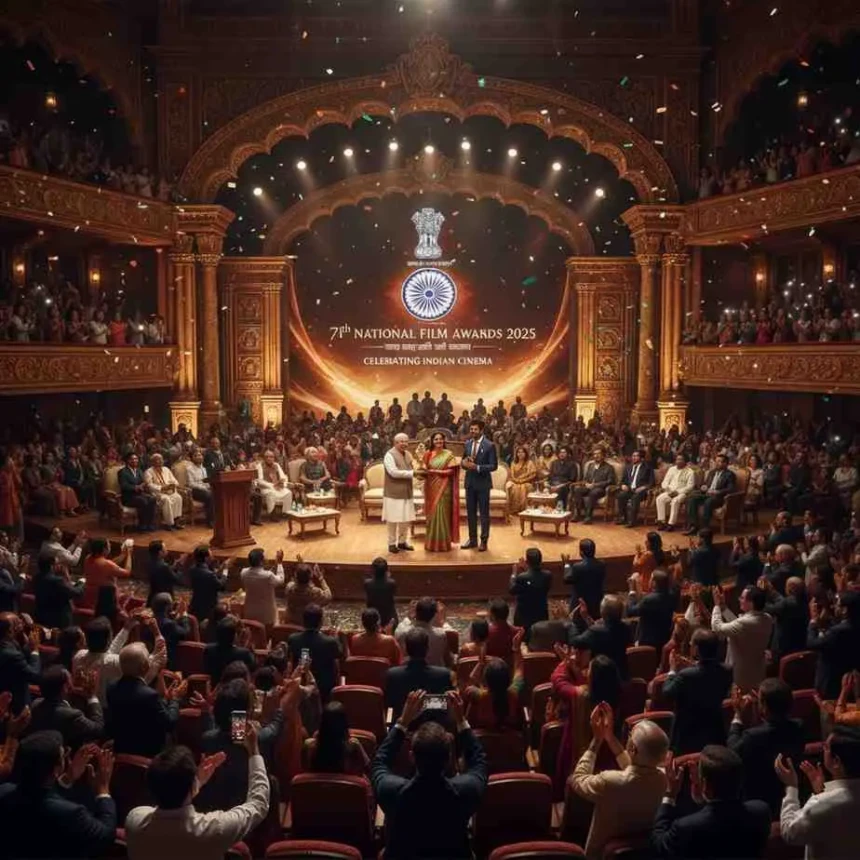
The 71st National Film Awards ceremony, held on September 23, 2025, at Vigyan Bhawan in New Delhi, was a landmark event celebrating the best of Indian cinema from the year 2023. Organized by the Directorate of Film Festivals under the Ministry of Information and Broadcasting, the National Film Awards are considered the highest honor in Indian cinema, recognizing artistic, technical, and cultural excellence in films across all Indian languages. Presided over by President Droupadi Murmu, the event brought together the crème de la crème of the film fraternity, honoring deserving winners for their outstanding contributions.
Historical and Cultural Significance of the National Film Awards
Since its inception in 1954, the National Film Awards have championed the diversity and artistic richness of Indian cinema. Unlike commercially-driven film awards, the National Film Awards place a special emphasis on encouraging films that promote social values, cultural heritage, and creative innovation. The awards not only celebrate Bollywood but also give equal importance to regional and vernacular cinema, fostering inclusivity and linguistic plurality.
The 71st edition was especially significant as it was conducted after delays caused by the COVID-19 pandemic, reestablishing the tradition of honoring cinematic brilliance in person and reviving the collective spirit of the industry.
The Ceremony
The ceremony started at 4 PM IST with a grand inauguration at Vigyan Bhawan, renowned for hosting prestigious national events. The venue was adorned with cultural motifs reflecting India’s cinematic legacy, setting an atmosphere of reverence and festivity.
President Droupadi Murmu personally presented the awards, symbolizing the nation’s respect for filmmakers, actors, and technicians who contribute towards India’s soft power through storytelling. The event was attended by illustrious personalities including veteran actor Mohanlal, Bollywood icons Shah Rukh Khan and Rani Mukerji, directors, producers, critics, and dignitaries.
The President’s address applauded the efforts of artists in documenting India’s myriad cultures and social realities, underscoring cinema’s role as a force for unity and progress.
Major Award Winners and Highlights
Dadasaheb Phalke Award: Celebrating a Legend
Perhaps the most awaited announcement was the conferment of the Dadasaheb Phalke Award, India’s highest cinematic honor, to Mohanlal. The Malayalam cinema superstar, celebrated for his extraordinary range and depth across over 400 films in various languages, became only the second Malayalam industry figure to receive this distinction, joining luminaries like Adoor Gopalakrishnan.
Mohanlal’s acceptance speech was heartfelt, expressing humility and gratitude towards his audience and colleagues who shaped his journey over five decades. His win was indeed a historic moment, affirming the growing recognition of South Indian cinema on the national stage.
Best Actor Award Shared: Shah Rukh Khan and Vikrant Massey
In a break from tradition, the Best Actor award was shared this year between Shah Rukh Khan and Vikrant Massey, exemplifying the award’s commitment to recognizing diverse talent irrespective of seniority or stardom.
Shah Rukh Khan received the honor for his intense portrayal in the blockbuster “Jawan,” marking his first National Film Award after over 30 years in the industry. Vikrant Massey was acknowledged for his compelling role in the film “12th Fail,” directed by Vidhu Vinod Chopra.
The shared award celebrated both commercial megastars and nuanced character actors, reflecting a wide spectrum of artistry.
Best Actress Award: Rani Mukerji
Rani Mukerji won Best Actress for her powerful performance in “Mrs Chatterjee vs Norway,” a role praised for depicting maternal courage and resilience. This award marked her first National Film Award, further cementing her legacy as one of Bollywood’s most versatile and respected actresses.
Recognized Films Promoting Social, National, and Environmental Values
Films like “Sam Bahadur” won the Best Film Promoting National Integration and Social Values, spotlighting cinema’s capacity to inspire patriotism and social responsibility.
Regional gems such as “Pookalam” (Malayalam; Best Editing), “Naal 2” (Marathi; Best Children’s Film), “The Kerala Story” (Best Cinematography), and several other linguistic winners underscored the awards’ inclusive ethos. The winners list showcased films highlighting themes of ecological balance, cultural preservation, and national unity—indicative of a socially engaged Indian cinema.
Technical Excellence and Musical Achievements
The awards also celebrated the technical crafts that underpin film artistry:
- G.V. Prakash Kumar won Best Music Direction for the Tamil film “Vaathi,” recognized for its innovative score blending traditional and modern elements.
- Playback singers Shilpa Rao and P.V.N.S. Rohit received accolades for “Jawan” and the Telugu film “Baby,” respectively.
- Awards for Best Costume Design, Make-up, Screenplay, Editing, and Cinematography accentuated the multifaceted talent behind cinematic success.
These recognitions served as reminders of the collaborative artistry powering India’s booming film industry.
Special Mention and Critic Awards
Alongside the mainstream categories, the National Film Awards gave special mentions and honored works in writing and criticism on cinema. Film critics like Utpal Dutta were recognized for their insightful contributions to the discourse on Indian cinema, fostering a culture of thoughtful evaluation and appreciation.
Cultural Impact and Industry Reflections
The 71st National Film Awards stand as a testament to Indian cinema’s resilience, innovation, and diversity. The ceremony not only celebrated individual achievements but also catalyzed conversations on the evolving nature of storytelling, technological advancements, and market dynamics.
Filmmakers spoke of the importance of telling authentic stories reflecting India’s evolving social fabric. The event reinforced cinema’s role as an educative and unifying force amidst global challenges.
Looking Forward: The Legacy and Future of the National Film Awards
With each edition, the National Film Awards both honor the past and inspire the future. The 71st ceremony reinforced the vision of a cinema industry committed not only to entertainment but also social relevance, artistic courage, and cultural preservation.
As Indian cinema embraces new technologies and global audiences via digital platforms, these awards serve as benchmarks of quality and integrity, encouraging creators across the country to push boundaries and explore diverse narratives.
Conclusion
The National Film Awards 2025 was a spectacular celebration of India’s cinematic brilliance, highlighting the efforts of stalwarts like Mohanlal, Shah Rukh Khan, Rani Mukerji, and rising talents like Vikrant Massey. Through a comprehensive range of categories acknowledging artistic, technical, and social contributions, the ceremony epitomized the spirit of Indian cinema—vibrant, diverse, and socially conscious.
The event reaffirmed the country’s commitment to fostering a rich cultural ethos through film, inspiring future generations of artists to carry forward the legacy of excellence and innovation that Indian cinema proudly upholds.