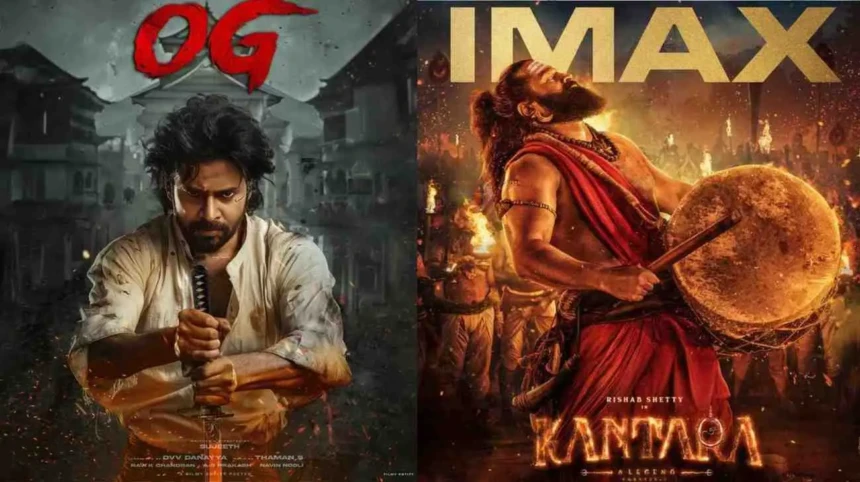
If there’s one headline dominating Indian film conversations right now, it’s the seismic opening and early-weekend juggernaut of Rishab Shetty’s Kantara: Chapter 1. What started as a regional phenomenon in earlier incarnations has exploded into a pan-India moment — not because of star wattage but because of rooted storytelling, bold marketing, and word-of-mouth momentum. At the same time, established regional stars and mass-market entertainers are posting healthy numbers, proving the Indian box office is no longer a straight Bollywood story but a multi-lane superhighway where regional pictures, star vehicles, and mid-budget dramas coexist and compete — often with surprising results.
Below I break down today’s top film stories, what they reveal about changing audience behavior, the cash flows altering industry math, and how creatives can respond to this rapidly fragmenting — yet opportunity-rich — landscape.
1) The Kantara Effect: Myth, Momentum, and Massive Collections
Kantara: Chapter 1 opened with extraordinary numbers for a non-Hindi big-budget launch: strong daily collections and a weekend surge that put it among the highest Saturday grosses of the year and quickly pushed its run toward major milestones. The film’s opening days show how a property with cultural specificity, production scale, and a smart pan-India distribution strategy can break out of language silos. The reported day-wise net numbers show large, consistent footfall across markets, suggesting the film isn’t just relying on a single region or diaspora showings — it’s landing across India.
Why this matters: three reasons. First, audiences are rewarding authenticity — narratives that feel rooted and rooted in local tradition can travel nationally when packaged and subtitled/dubbed properly. Second, the franchise/prequel model (this is a return to the Kantara universe) allows filmmakers to build trust before raising budgets and release scale. Third, smart release timing (holiday weekends, limited direct competition) plus social currency (viral reactions, praise from peers) turbocharges box office legs. For producers and distributors, Kantara’s run is a case study on balancing production investment with marketing that emphasizes cultural spectacle and visceral experience rather than only celebrity-driven selling points.
2) Regional Muscle: They Call Him OG and the Telugu Wave
Telugu star-fronted films continue to wield enormous box office power. One of the highest-profile regional releases this season, They Call Him OG (Pawan Kalyan) has maintained strong week-to-week collections, crossing notable totals in its second week and demonstrating the depth of dedicated fanbases in Telugu markets and beyond. The film’s steady accrual (hundreds of crores in total gross territory) underscores how star loyalty, genre clarity (gangster/action), and wide release maps translate into long theatrical windows.
Implications: Telugu/Mass-market releases are no longer “regional” in impact — they can shape pan-India box-office charts and influence theatrical windows, satellite, and streaming negotiations. For Indian cinema overall, this cements the idea that multiple language industries can simultaneously produce national-scale hits, forcing distributors and multiplex chains to allocate screens intelligently rather than defaulting to Hindi priority.
3) Mid-Budget Battles: Romantic Dramas and Audience Choice
Even amidst blockbuster spectacle, mid-budget star films show resilience. The Varun Dhawan — Janhvi Kapoor film Sunny Sanskari Ki Tulsi Kumari had a decent opening weekend, crossing respectable early totals despite competing with Kantara and other regional draws. This tells us audiences still turn out for familiar star-led formulas when the product promises clear entertainment value — but their attention is finite and fickle amid heavy competition.
Takeaway: mid-budget romantic or family dramas must sharpen their hooks — either through distinctive storytelling, platform-first promotion, or festival/critical buzz — to survive crowded release calendars. Marketing must find niches: targeting diaspora, secondary cities, or OTT tie-ins early to capture a slice of attention before spectacle films soak up screens.
4) Genre Signals: Historical Dramas, Horror, and New Appetite
Beyond individual titles, today’s media mix highlights two genre trends pushing India’s cinematic boundaries. One is the continued appetite for historical dramas that revisit national episodes with scale and spectacle. Roundups of historical films (from Sam Bahadur to Tanhaji and Sardar Udham) show audiences respond strongly to well-made period pieces with emotional gravitas and production ambition. These films carry prestige and marketplace pull — they attract festival conversation, awards chatter, and franchise potential.
The other trend is genre boldness: horror and sub-genres (even vampire-centric projects) are getting attention, suggesting a younger multiplex audience willing to experiment. That’s significant because genre films are cost-efficient and can be highly profitable if they tap viral marketing. Studios and indie producers should watch this space: smart horror + tight budgets = outsized returns.
5) Box Office as a Health Check for Film Democracy
Two concurrent facts stand out from today’s reports. One, box-office tallies no longer flow from a single pipeline; they are aggregated from many language industries. Two, digital and grassroots fandoms (social shares, fan clubs, influencer reactions) can lift films that lack star megabrands. Kantara and OG are prime examples: they leveraged authenticity, fan communities, and wide release to punch above expected weight.
This fragmentation actually democratizes success: a truly resonant story, matched with savvy distribution, will find pockets of enthusiastic audiences and then grow outward through social validation and cross-market dubbing. For policymakers and trade bodies, this points to the need for infrastructure that supports multilingual marketing, fair screen allotment, and translation/subtitling standards to help more regional hits scale nationally.
6) Marketing Mechanics: Trailers, Festival Buzz, and Surprise Word-of-Mouth
A pattern in the top stories is intentional drip-marketing: trailers timed for maximum online chatter, strategic festival submissions, and controlled preview screenings for influencers. Kantara’s trailer rollouts and poster campaigns created ritual anticipation; OG and other regional films relied on star-led promotional tours and localized fan activations. The lesson is clear: marketing is no longer an add-on — it’s a creative discipline that must match the film’s tone.
Word-of-mouth still remains the kingmaker. In an era when first-day numbers are a headline, it’s the aftershock — sustained occupancy, repeat viewings, and secondary-market longevity — that determines a run. Films that convert early curious viewers into evangelists will sustain beyond opening weekend.
7) The Streaming Equation: Windowing, Prestige, and Revenue Mix
Streaming rights deals now form a critical revenue pillar, especially for mid-tier and regional films. Producers are juggling theatrical windows optimized for box-office muscle against the certainty of OTT checks. A timely example: titles that perform well theatrically command higher streaming fees and prime placements, which in turn rekindles conversation and can feed long-tail viewership. Conversely, streaming-first films can cultivate dedicated fanbases and festival prestige, though they may miss theatrical bulk revenue. This two-track economy requires producers to negotiate smarter, staggered release clauses, and global platform partnerships — particularly for films that aim to be “pan-India” rather than language-limited.
8) Talent & Industry Movements: Stars, Directors, and Power Shifts
The current headlines show another structural trend: the empowerment of director-driven projects and the strengthening of star brands outside Bollywood’s traditional orbit. Rishab Shetty is emblematic of an auteur who commands both creative and commercial trust. Similarly, major Telugu stars continue to set the calendar and revenue arcs. This empowerment rebalances bargaining power: studios and streamers must win over auteurs and regional stars with deals that respect creative ownership and profit sharing.
For young filmmakers, the signal is encouraging. There’s more room for original voices who combine cultural authenticity with technical craft. But success also demands professionals learn business fluency — distribution, festival strategy, and international subtitling/dubbing logistics.
9) Risks & Headwinds: Overcrowded Calendars and Quality Control
Not everything is sunny. A major risk is release clustering — too many big-picture launches in the same window cannibalize each other. When a cultural juggernaut absorbs screens (like Kantara has in markets where it dominates), other films — even decent ones — struggle to reach audiences. This creates pressure on exhibitors to manage screens and on producers to choose windows strategically.
Another risk: the rush to replicate regional successes may encourage copycatting rather than originality. Festivals and discerning critics will still penalize formulaic attempts. The industry must balance quick-follow commercial projects with long-term investments in quality storytelling.
10) What Filmmakers, Producers, and Marketers Should Do Next
For filmmakers
- Emphasize authenticity. Stories grounded in local life, mythology, or history can travel when executed with craft and scale.
- Build cross-market adaptability — plan dubbing/subtitling and cultural contextualization during pre-production.
For producers
- Diversify revenue: negotiate smart theatrical-to-OTT windows and consider staggered releases to maximize both box office and streaming potential.
- Invest in targeted marketing: create region-specific campaigns that don’t waste budget on one-size-fits-all advertising.
For marketers & distributors
- Leverage fan communities early. Give superfans content that is sharable and emotional — exclusive premieres, BTS clips with directors, and curated regional screenings.
- Time trailers and posters to build ritual anticipation; use festival screenings to seed critical credibility.
11) Predictions (Near-Term)
- More pan-India regional hits — as dubbing and subtitling logistics improve, expect Kannada, Telugu, and Tamil films to increasingly compete on national charts.
- Genre diversification — horror, historical epics, and grounded social dramas will enjoy growing investments because of predictable audience pockets and festival potential.
- Strategic windows — studios and producers will increasingly adopt staggered release schedules (region-first, then national, then OTT) to maximize lifecycle revenue.
12) Final Take: A More Democratic, More Complicated Ecosystem
Kantara: Chapter 1’s runaway early box office, steady Telugu releases like They Call Him OG, and competitive mid-budget films — paints a picture of an Indian film industry in transition. The old model (one dominant industry setting the tone) has been replaced by a plural landscape where stories built from the ground up, regional fandoms, smart marketing, and strategic distribution can all flip expectations. The winners will be the creators who combine craft with business savvy; the distributors who master multilingual rollouts; and the platforms that partner fairly with regional producers.
For audiences, this is an excellent time: more voices, more genres, and more choices. For filmmakers, it’s a call to take risks rooted in authenticity and to master the new rules of release economics. If you’re making a film now, your pathway to scale is clearer than it was a decade ago — but success demands sharper storytelling, smarter marketing, and nimble distribution tactics.