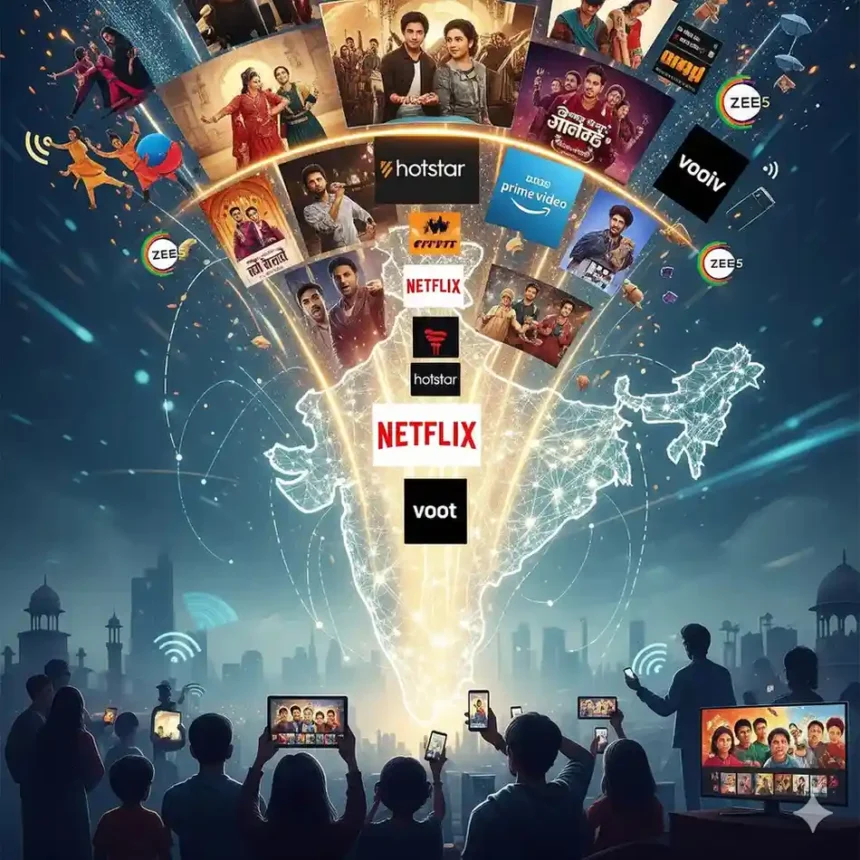
The over-the-top (OTT) streaming sector in India has witnessed explosive growth over the past decade, and 2025 marks a pivotal year in its evolution. Fueled by widespread internet and smartphone penetration, innovative monetization strategies, and shifting consumer preferences, India’s OTT industry is reshaping how entertainment content is created, distributed, and consumed. This comprehensive article explores the current landscape, emerging trends, market dynamics, technological innovations, major players, and future outlook for India’s OTT market in 2025.
The OTT Boom: Scale and Scope
India’s OTT market reached an estimated ₹37,940 crore (approximately $4.5 billion USD) in 2025, with more than 550 million users—more than a third of India’s population—engaging with streaming services regularly. But beneath this staggering user base lies the fascinating reality of monetization models, viewing habits, platform strategies, and content diversity radically reshaping the entertainment ecosystem in India.
While subscription video on demand (SVOD) platforms like Netflix and Amazon Prime Video retain a prominent role, ad-supported video on demand (AVOD) has surged dramatically. AVOD users in India grew from 328 million to nearly 400 million in just 12 months, showing that free, ad-supported content is converting viewer attention into revenue more effectively than traditional subscriptions. This “India-supported” viewing model is proving dominant due to economic affordability, regional language availability, and mobile-first consumption habits.
Major OTT Players and Market Shares
India’s OTT landscape is highly competitive, with several major players collectively controlling the vast majority of market share:
- JioCinema + Disney+ Hotstar dominate with a 25% market share in subscription streaming, generating over ₹8,835 crore in revenue aided by cricket streaming rights and strategic bundling with Jio telecom services.
- Amazon Prime Video holds steady with a 23% share, focusing on maintaining an entrenched subscriber base through diverse content tailored for Indian audiences.
- Netflix shows impressive growth, rising to a 19% share from 17% in the previous quarter, reflecting increased local content investments and premium pricing strategy appeal.
- Apple TV+ grows to 14%, gaining traction among premium and niche segments with high-quality original productions.
- Regional and niche platforms like ZEE5 and Sony LIV maintain presence but face challenges from global streamers, holding 10% and 5% respectively.
Indian OTT Revolution and Filminity’s Role in Empowering Telugu Independent Cinema
The over-the-top (OTT) streaming revolution has transformed India’s entertainment landscape, bringing films and series directly to millions of screens nationwide. As internet access and smartphone adoption soared, OTT platforms became powerful vehicles for creativity, cultural expression, and commercial success. Among the many players catalyzing this transformation, the Filminity OTT platform stands out as a champion dedicated specifically to Telugu independent cinema, nurturing grassroots filmmakers and introducing rich regional narratives to wider audiences.
Filminity OTT: A Beacon for Telugu Independent Films
While many OTT platforms compete primarily for mainstream and Bollywood content, Filminity OTT carves a unique space by spotlighting Telugu independent films. Recognizing the wealth of untapped talent in smaller productions, shorts, and indie projects, Filminity offers these films a dedicated, curated outlet to reach discerning audiences.
- Showcasing Diverse Voices: Filminity highlights stories that break stereotypes and explore unconventional themes—from rural tales to slices of urban life, from experimental formats to socially conscious narratives.
- Platform for Emerging Talent: Independent filmmakers, actors, and writers gain visibility and networking opportunities, empowering the next generation of Telugu artists.
- Community and Collaboration: Regular digital film festivals, premieres, and panel discussions hosted by Filminity foster interaction, knowledge exchange, and a creative community spirit.
Viewer Behavior and Content Preferences
Indian consumers favor flexibility, convenience, and diverse regional content. OTT platforms have thrived by offering:
- Anytime, anywhere access on smartphones and smart TVs.
- Multiple regional language options beyond Hindi and English.
- Original series, movies, and live sports events.
- Personalized recommendations powered by AI-driven algorithms.
The average daily time spent on OTT platforms in India hovers around 3 hours, with weekly streaming averaging 17 hours. Mobile streaming accounts for a disproportionate share, catering to India’s rapidly growing smartphone population.
Popular genres span family dramas, thrillers, comedy, mythological epics, and reality formats. Platforms increasingly invest in regional originals tailored to localized tastes, fueling subscriber retention and broader cultural engagement.
Technological Innovations Shaping OTT in India
India’s OTT platforms are leveraging AI, machine learning, and virtual production technologies to enhance user experience and content quality:
- AI-powered recommendations improve content discovery and user engagement.
- Automated dubbing and subtitling streamline regional content localization.
- Virtual sets and LED volumes reduce costs for high-production value content.
- Interactive and gaming integration enables second-screen engagement during live events.
- Enhanced analytics guide content investments aligning with viewer demographics.
This technology-driven content personalization and cost efficiency enable Indian OTT platforms to compete globally while catering to the country’s linguistic diversity.
Monetization Models and Market Evolution
India’s OTT market showcases a variety of monetization strategies blending subscription fees, advertisement revenues, and hybrid models:
- Subscription Video on Demand (SVOD): Platforms like Netflix, Amazon Prime, and Apple TV seek premium users who pay monthly/annual fees for ad-free content.
- Ad-supported Video on Demand (AVOD): Platforms such as MX Player, YouTube, and JioCinema offer free content supported by advertisements, targeting price-sensitive users.
- Transaction Video on Demand (TVOD): Some platforms offer pay-per-view or rental services for exclusive titles.
- Hybrid Models: Platforms like Disney+ Hotstar combine subscription and ad-supported tiers to maximize reach and revenue.
- Shoppable Media & E-commerce Integration: Amazon Prime Video and MX Player embed direct product purchases within streaming content, pioneering new revenue channels.
The rise of AVOD — with viewer counts nearly doubling in recent years — underscores the shift toward accessible entertainment fueled by affordable mobile data and localized content.
Regional OTT Platforms and Language Diversity
India’s multilingual population drives OTT platforms to diversify content offerings beyond Hindi and English. Regional platforms focusing on Kannada, Telugu, Tamil, Marathi, Bengali, and other languages have multiplied, ensuring underserved audiences find tailored entertainment.
Regional OTT giants like Aha (Telugu), Hoichoi (Bengali), and Sun NXT (Tamil) report strong subscriber growth. Furthermore, major platforms invest heavily in regional originals, boosting engagement and lowering subscriber churn.
Challenges Facing the OTT Ecosystem
Despite rapid growth, Indian OTT platforms confront several challenges:
- Content Saturation & Quality Control: Increasing production is paired with mixed content quality, requiring better curation.
- Piracy and Copyright Infringement: OTT releases face rampant digital piracy affecting revenue.
- Regional Payment Barriers: While subscriptions rise, monetizing lower-income and rural users remains tough.
- Regulatory Uncertainty: Striking censorship and content guidelines sometimes constrain creative freedom.
- Competition and Consolidation: Smaller players struggle to survive as market leaders consolidate.
Addressing these hurdles will be critical to sustaining healthy growth and user trust.
The Future Outlook: Growth Trajectories and Market Projections
Industry experts predict India’s OTT market size will reach over $6 billion by 2030, sustaining an annual Compound Annual Growth Rate (CAGR) close to 7%. Expansion will be driven by:
- Enhanced 5G connectivity facilitating higher-quality streaming.
- Continued mobile penetration in Tier 2 and 3 cities.
- Development of interactive, immersive viewing experiences.
- Strategic partnerships between telecom, e-commerce, and content producers.
- Accelerating mergers and acquisitions shaping a more consolidated market.
The flourishing OTT economy also stimulates ancillary industries such as production technology, digital marketing, and talent development.
Conclusion: OTT as India’s Entertainment Revolution
From its nascent stage a decade ago to today becoming India’s primary entertainment mode, OTT streaming has transformed content consumption for millions. Its affordability, accessibility, and customization accomodate India’s linguistic diversity and geopolitical expanse.
Platforms continue innovating to capture attention, expand monetization, and produce culturally resonant stories. OTT in India is no longer just an auxiliary channel but a formidable media ecosystem shaping the future of entertainment.
As India moves forward into a digital-first entertainment age, OTT platforms will remain central, influencing narratives, star power, viewership, and industry economics—ushering in an unprecedented era of storytelling democracy, technology-driven innovation, and creative entrepreneurship.
If you’d like, a deep dive article focused on a particular OTT player, technology trend, or viewer behavior can also be created.