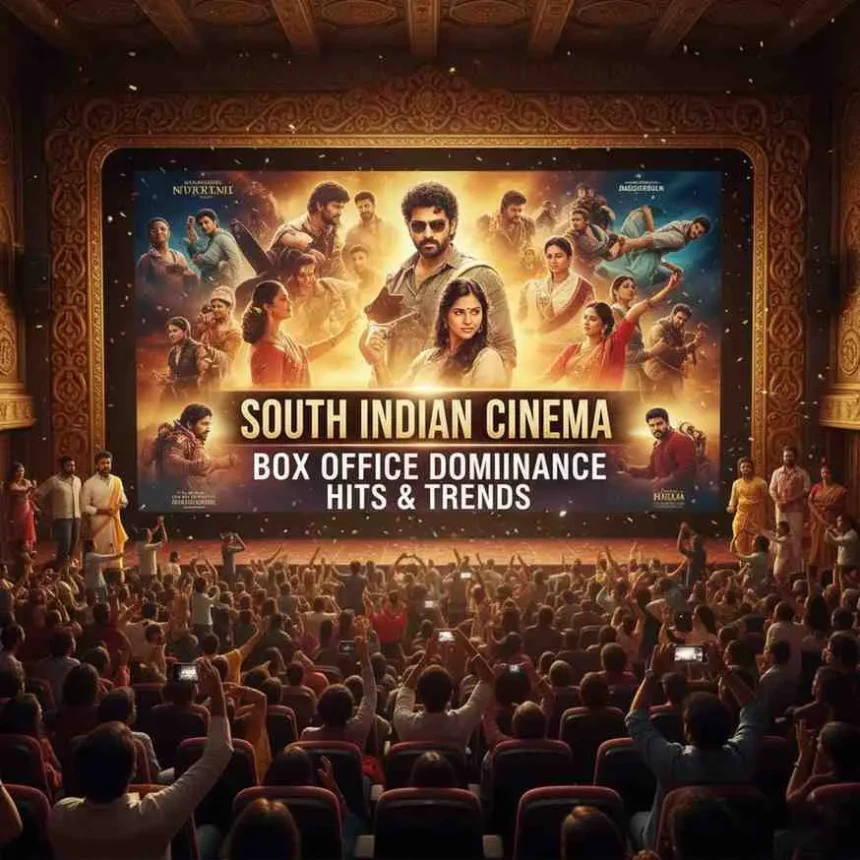
As September 2025 draws to a close, the Indian film industry is witnessing a remarkable surge fueled by ambitious releases from South India. Telugu, Tamil, and Malayalam films are now driving not just box office numbers but also social media conversations, star-making moments, and critical debates nationwide. At the center of this sweeping trend are a handful of high-profile films: “They Call Him OG,” the superhero hit “Mirai,” and impactful southern releases such as “Akhanda 2,” “Madharasi,” and “Ghaati.”
“They Call Him OG”: Pawan Kalyan Ignites the Box Office
Released on September 25, “They Call Him OG” has single-handedly reset the standards for commercial openings in India. Starring power-packed Telugu icon Pawan Kalyan and Bollywood’s Emraan Hashmi (in his Telugu debut), the film opened to universal first-day excitement. Its day-one collection was a staggering ₹90–100 crore net in India, immediately placing it among the year’s highest openers and the all-time top ten Indian film debuts.
Within two days, “OG” crossed ₹104 crore net, sustaining a strong run thanks to record-breaking premium showings and exceptionally high occupancy rates in Hyderabad, Vijayawada, and other major cities. The film’s global box office already stands at over ₹144 crore gross—outperforming many Hindi and pan-Indian action films. Industry trackers have hailed it as Pawan Kalyan’s career fastest to the ₹100 crore mark, with the film now projected to cross further benchmarks as the weekend progresses.
Social Media Storm: Reviews, Fan Celebrations, and Critique
OG isn’t just a box office story—it is a social phenomenon. Twitter, Instagram, and Facebook have exploded with fan-made celebration videos, memes, and #OGMania hashtags. The film’s mass appeal is driven by Pawan Kalyan’s magnetic action hero persona and the new dynamic he brings opposite Emraan Hashmi’s villainous Omi Bhau. Priyanka Mohan and Prakash Raj add further star power, resulting in viral clips and posts dissecting each action sequence and punchline.
Critics have generally praised the film’s stylish narrative, action choreography, and Thaman’s high-energy music. However, some reviews have highlighted pacing issues in the first half and a missed opportunity for deeper emotional engagement, suggesting the film could have balanced its mass entertainer ambitions with stronger storytelling. Despite this, most viewers agree OG is “larger than life,” and its box office clout has prompted discussions about a sequel and expanded pan-Indian distribution.
“Mirai”: The Silent Superhero Blockbuster
In contrast to OG’s overt mass appeal, “Mirai” has become a word-of-mouth sensation in Telugu cinema. With no mega-budget or massive star cast, it has crossed an extraordinary ₹84 crore mark in just two weeks. Starring Teja Sajja as the titular superhero, Mirai has tapped directly into the aspirations of youth audiences, demonstrating a new craving for contemporary, homegrown hero narratives.
Social reactions around Mirai are overwhelmingly positive—praising its special effects, relatable themes, and Teja Sajja’s breakthrough performance. The movie is widely credited with revitalizing the Telugu superhero genre and giving new hope to ambitious young actors outside traditional star circuits. Trade analysts note that Mirai’s numbers—usually reserved for established action franchises—point to a new wave of audience hunger for innovative stories and a willingness to support creators with fresh ideas.
Other Major Southern Hits: “Akhanda 2,” “Madharasi,” “Ghaati”
“Akhanda 2”: Action and Spectacle
Balakrishna’s “Akhanda 2” delivers high-voltage action and spiritual overtones, appealing to mass audiences across Andhra Pradesh, Telangana, and Karnataka. Known for its powerful fight sequences and in-your-face soundtrack, the sequel continues to drive steady weekday collections, confirming the star’s ongoing draw on regional and pan-Indian stages.
“Madharasi”: Psychological Thrills
On the Tamil front, “Madharasi” has captured critical and commercial attention for its psychological depth and twist-laden plot. The film’s cerebral approach is a break from conventional Kollywood action, drawing in urban cinephiles as well as the multiplex crowd. Madharasi’s steady box office and streaming pick-up demonstrate the appeal of genre diversity in South Indian markets.
“Ghaati”: A New Age Crime Drama
Anushka Shetty headlines “Ghaati,” a Telugu crime drama praised for its realism, taut pacing, and progressive storytelling. As crime dramas claim a greater share of regional box office, Ghaati’s commercial performance underscores the success of female-led projects, which are now more common and more celebrated in southern cinema than ever before.
Data-Driven Success: The Numbers Tell the Story
This September, the dominance of South Indian films is clear in the numbers:
- “They Call Him OG”: ₹104 crore India net (2 days), ₹144 crore gross worldwide
- “Mirai”: ₹85.29 crore net in India, ₹99.45 crore gross (2 weeks)
- “Madharasi”: ₹62.25 crore India net, ₹98 crore gross
- “Akhanda 2”: ₹7.84 crore net in India, steady collections through weekdays
- “Ghaati”: ₹7.06 crore net (opening), strong repeat business
These figures put South Indian cinema at the top of nationwide charts, matched only by major Bollywood releases and international hits like “The Conjuring: Last Rites” and “Coolie.”
National and Global Impact
The success of these films is changing how Indian cinema is perceived both at home and abroad. International audiences now watch Telugu and Tamil films on OTT platforms with subtitles and dubs, contributing to growing overseas box office shares. Directors and producers are rethinking release strategies, investing in pan-Indian marketing, and leveraging fan bases on social media for global premieres and festival campaigns.
Audience and Industry Reaction
Indian audiences have embraced mass spectacle with renewed enthusiasm, while critics and content creators debate cinematic innovation, diversity of genres, and the next wave of storytelling.
- Urban moviegoers flock to blockbusters for big-screen thrills.
- Youth and family audiences support newer genres—superheroes, psychological thrillers, and women-led crime dramas.
- Industry analysts acknowledge the South’s ability to push boundaries, foster new stars, and maintain box office health in a post-pandemic era.
The Road Ahead: September’s Legacy
September 2025 will be remembered as a turning point—a month when South Indian cinema grabbed the spotlight, revitalizing Indian box office trends and global storytelling ambitions. With OG’s record-breaking run, Mirai’s grassroots success, and a slate of strong genre films, Indian cinema signals not just commercial growth but a creative renaissance, driven by bold vision, audience engagement, and critical acclaim.
The new golden era of Indian movies will be defined by diversity, ambition, and the courage to tell stories that connect across regions, cultures, and continents.
Conclusion : South Indian Cinema Dominates Indian Box Office 2025
September 2025 marks a powerful turning point for the Indian film industry, as South Indian cinema cements its leadership across the national box office and cultural imagination. Films like “They Call Him OG,” “Mirai,” “Akhanda 2,” “Madharasi,” and “Ghaati” have not only delivered outstanding commercial results but have also shaped new audience expectations, with pan-Indian storytelling, genre diversity, and ambitious production values.
The unprecedented streak of Southern hits is gradually redefining the market’s power balance—regional industries now account for at least 60% of India’s box office share, outpacing Bollywood both in earnings and cultural impact. Telugu and Tamil blockbusters, in particular, are thriving even as they face mixed experiences with occasional high-profile flops, while Malayalam and Kannada cinema contribute critical acclaim and the occasional sleeper hit. Strategic release timing, aggressive pan-India dubbing, and sophisticated marketing have allowed South Indian films to reach audiences far beyond their traditional heartlands.
This momentum has sparked healthy competition and forced introspection within Bollywood, which now responds with stronger scripts, higher production values, and more inclusive content to regain ground with a broader, evolving Indian audience. The clash between North and South cinemas seen in recent festival seasons speaks to a democratizing film culture, where content quality, narrative innovation, and emotional resonance matter more than linguistic boundaries or star power alone.