The Rise of “Kantara: A Legend Chapter 1” — From Folklore to Film History
Few stories capture the cultural pulse of India today as vividly as Rishab Shetty’s Kantara: A Legend Chapter 1. On October 13, 2025, the film shattered yet another milestone, surpassing the lifetime domestic collection of Baahubali: The Beginning to become the 12th biggest hit in Indian cinema history.
With box-office receipts crossing the ₹400-crore mark within eleven days of release, Kantara has transformed from a regional Kannada phenomenon into a pan-Indian cultural event. The film’s mythic tone, rooted in Dakshina Kannada folklore and spiritual mysticism, struck a rare balance — artfully blending local legends with universal cinematic language.
Analysts note that the film’s enduring success reflects a shift in audience appetite: viewers are embracing narratives that celebrate regional identity while maintaining national resonance. The audience response across dubbed versions in Telugu, Hindi, and Tamil markets has been extraordinary, reaffirming India’s growing love for grounded, story-driven spectacles rather than formulaic star vehicles.
Shetty’s film, crafted with earthy realism and visceral energy, shows how rooted storytelling can wield global appeal. The phenomenon is reminiscent of KGF and Baahubali, yet Kantara’s scale feels more organic — its success achieved through audience word-of-mouth, not marketing blitz. It is proof that mythology, when retold with conviction, can transcend borders and languages.
OTT Platforms Rewrite Release Rules
As theatrical blockbusters dominate one end of the spectrum, the other end is being reshaped by OTT-first releases and evolving digital strategies.
On October 13, Netflix India announced the direct-to-OTT premiere of Takshakudu, a Telugu thriller starring Anand Deverakonda and Nitanshi Goel. This marks a bold move — skipping theaters altogether in favor of global streaming visibility. In the same announcement, Netflix also revealed six new Tamil and Telugu titles, including Legacy, Super Subbu, and Made in Korea.
These moves signal Netflix’s deepening commitment to regional content diversification. As the platform expands its South Indian slate, filmmakers are discovering new avenues to reach younger audiences who consume entertainment primarily online.
The OTT shift is not simply about convenience; it represents a redefinition of audience behavior. Many mid-budget films, particularly thrillers and social dramas, have realized that theatrical release costs — prints, promotions, and screen competition — often outweigh the benefits. Digital platforms, by contrast, provide instant national and global reach.
This emerging model may soon become the default for many storytellers, especially those balancing creative freedom with financial pragmatism. In 2025’s post-pandemic entertainment economy, filmmakers no longer measure success solely in box-office numbers but in streaming traction and engagement analytics.
Delays, New Announcements, and Shifting Creative Energy
The week also saw a string of updates about upcoming projects — some delayed, others newly green-lit — that reflect the industry’s fluid nature.
RJ Balaji confirmed that his film Karuppu, starring Suriya, has been delayed until 2026 owing to technical post-production challenges. While fans expressed disappointment, Balaji reassured that a promotional song will drop around Diwali, keeping the film’s buzz alive.
Meanwhile, filmmaker Mahesh Narayan — known for his nuanced narratives (Take Off, Malayankunju) — has teamed up with producer Ravi Bhagchandka for a survival drama titled Bombay High. Inspired by true events surrounding an offshore oil-rig disaster, the film promises a gripping portrayal of courage amid catastrophe. Industry watchers predict that such “real-life thrillers” may define the next cinematic wave, combining spectacle with authenticity.
Elsewhere, Bollywood’s most unpredictable chameleon, Bobby Deol, set social media aflame with his new look as Professor White Noise. The cryptic photo, featuring stark white hair and avant-garde styling, has led fans to speculate that it’s tied to an upcoming film titled Alpha, where Deol may appear as a villain.
The diversity of these projects underscores the industry’s ongoing balancing act — between large-scale commercial ambitions and innovative, content-driven storytelling. For every mythic blockbuster like Kantara, there’s a survival drama, a psychological thriller, or an introspective social narrative waiting to redefine cinematic boundaries.
Regional Policies and the Language Divide
While filmmakers innovate creatively, government policy continues to shape — and sometimes disrupt — regional cinema.
In West Bengal, a recent state government notification mandating prime-time screening of Bengali films in all multiplexes has ignited fierce debate. The policy, designed to revive Bengali cinema’s local visibility, faces resistance from exhibitors who argue that such mandates could hurt revenues and limit flexibility.
Many multiplex owners have cited the limited availability of high-quality Bengali content and the high cost of digital projection systems as barriers. The standoff highlights a wider national issue — balancing cultural preservation with commercial viability.
The situation mirrors challenges in other states where regional cinema fights for equal screen space against Hindi and Hollywood blockbusters. The debate goes beyond language: it touches on the identity and autonomy of local filmmakers struggling to survive in a hyper-competitive media landscape.
Simultaneously, the Tamil industry saw contrasting fortunes. Dhanush’s Idli Kadai, after a promising start, saw its box-office collections plummet by its 13th day, earning barely ₹50 lakhs net across languages. Despite star power and high production values, the film’s quick decline reiterates an old truth — content triumphs over celebrity.
Viewers today are vocal, connected, and selective. The failure of a big-budget star film alongside the rise of small-town, story-rich hits like Kantara and Sapta Sagaralu Dhaati Side B demonstrates how Indian audiences now reward authenticity over formula.
The Filmfare Awards 2025 — A Celebration of Nostalgia and Renewal
In the midst of box-office drama and streaming evolution, Bollywood gathered for its grandest annual celebration — the 70th Filmfare Awards, hosted this year in Ahmedabad.
The night sparkled with nostalgia. Veteran performers received standing ovations, and several tributes reminded audiences of Hindi cinema’s enduring emotional pull. Films like 12th Fail, Jawan, and Article 370 dominated the winners’ list, reflecting a balance between commercial powerhouses and socially relevant narratives.
New-age stars shared the stage with legends, symbolizing a healthy generational transition. Critics praised the ceremony for maintaining the delicate equilibrium between sentimentality and modernity — recognizing craft while celebrating stardom.
Meanwhile, the upcoming Diwali season promises another explosion of cinematic energy. Maddock Films’ horror-comedy Thamma, starring Ayushmann Khurrana, Rashmika Mandanna, and Nawazuddin Siddiqui, is set for an October 21 release. The fourth song, Poison Baby, dropped on October 13 and instantly trended on streaming platforms.
Thamma continues Maddock’s successful “Horror-Comedy Universe,” following Stree, Bhediya, and Munjya. The franchise has built its own fanbase — audiences drawn to a uniquely Indian blend of fear and laughter. The studio’s marketing strategy of staggered content release — songs, teasers, and cross-universe hints — ensures constant engagement leading up to Diwali.
Lessons from the Week: India’s Cinematic Soul in Transition
Bringing together these stories — record-breaking folklore epics, digital-first releases, policy disputes, and nostalgic award nights — offers a panoramic view of Indian cinema’s dynamic ecosystem.
a. Regional to National Scaling:
Kantara’s journey proves that regional stories, when emotionally universal, can transcend linguistic boundaries. The democratization of content, aided by dubbing, subtitling, and digital distribution, is redefining what qualifies as a “national film.”
b. Digital Transformation:
OTT platforms are no longer secondary. They’re parallel ecosystems fueling new forms of creativity. In fact, success metrics are evolving: a film’s impact is now measured by watch-hours, memes, and global conversations, not just ticket sales.
c. Star Power vs. Story Power:
The downfall of Idli Kadai beside Kantara’s rise reminds the industry that audiences have matured. Emotional truth, not superstardom, drives loyalty. Even mass entertainers now require credible writing and world-building.
d. Regional Policies and Cultural Identity:
The Bengali screening mandate debate sheds light on the thin line between cultural protectionism and artistic freedom. Governments must enable ecosystems — funding, tax relief, and skill development — rather than impose rigid programming quotas.
e. Festive-Season Economics:
The approach to Diwali remains pivotal. The coming weeks will test whether Thamma, Alpha, and Kanguva can ignite box-office magic amid streaming saturation.
The Broader Outlook: Indian Cinema at a Turning Point
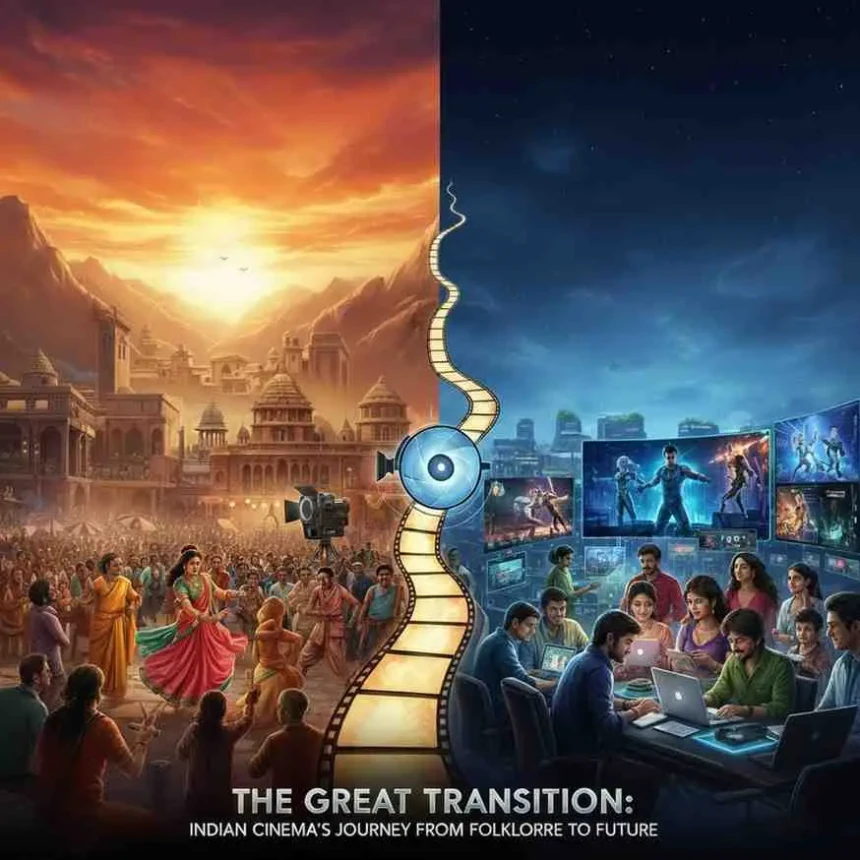
October 2025 feels like a microcosm of India’s entertainment future — a collision of tradition and technology, folklore and futurism.
Filmmakers from Tier-2 cities are bringing unheard stories to national screens. Regional industries, once treated as silos, are now thriving laboratories of innovation. Audiences, empowered by global access, are setting higher standards for storytelling and craft.
At the same time, the old theatrical glamour persists — award nights, box-office races, and festival releases continue to shape popular discourse. Yet, beneath the glitter lies a more fundamental truth: cinema is returning to its storytelling roots, armed with new tools and distribution models.
Producers are increasingly data-driven, analyzing demographic insights before green-lighting scripts. Directors are experimenting with hybrid releases — limited theatrical runs followed by streaming premieres. And actors, freed from the constraints of typecasting, are embracing challenging roles in smaller but more meaningful films.
This coexistence of grassroots authenticity and digital ambition makes Indian cinema one of the most fascinating cultural laboratories in the world today.
The Human Element — Why Stories Still Matter
Amid technological upheaval, one constant endures: the human hunger for connection.
Films like Kantara remind us that stories rooted in belief, landscape, and folklore hold the power to move millions. They affirm identity in a rapidly changing world. Likewise, digital-first releases such as Takshakudu show that innovation need not mean detachment — they too offer intimate access to new worlds.
When actors like Bobby Deol reinvent themselves, or when regional industries fight for representation, they echo the timeless battle between reinvention and preservation that defines Indian creativity.
As the industry stands poised between its past and its future, October 2025 will be remembered not just for numbers or headlines but for what it revealed about India’s cinematic soul — restless, resilient, and relentlessly imaginative.
Conclusion: The Era of Reinvention
In the end, the week of October 13, 2025, tells a singular story: Indian cinema is reinventing itself in real time.
From Rishab Shetty’s divine-earthy triumphs to Netflix’s regional experiments, from West Bengal’s policy controversies to the nostalgia-drenched Filmfare Awards, every event points toward a new equilibrium — one where passion, purpose, and platform converge.
India’s storytellers are no longer asking for permission to dream big; they’re rewriting the grammar of cinema itself. The coming festive season will likely cement these shifts, but the message is already clear:
The future of Indian cinema is both local and limitless.