
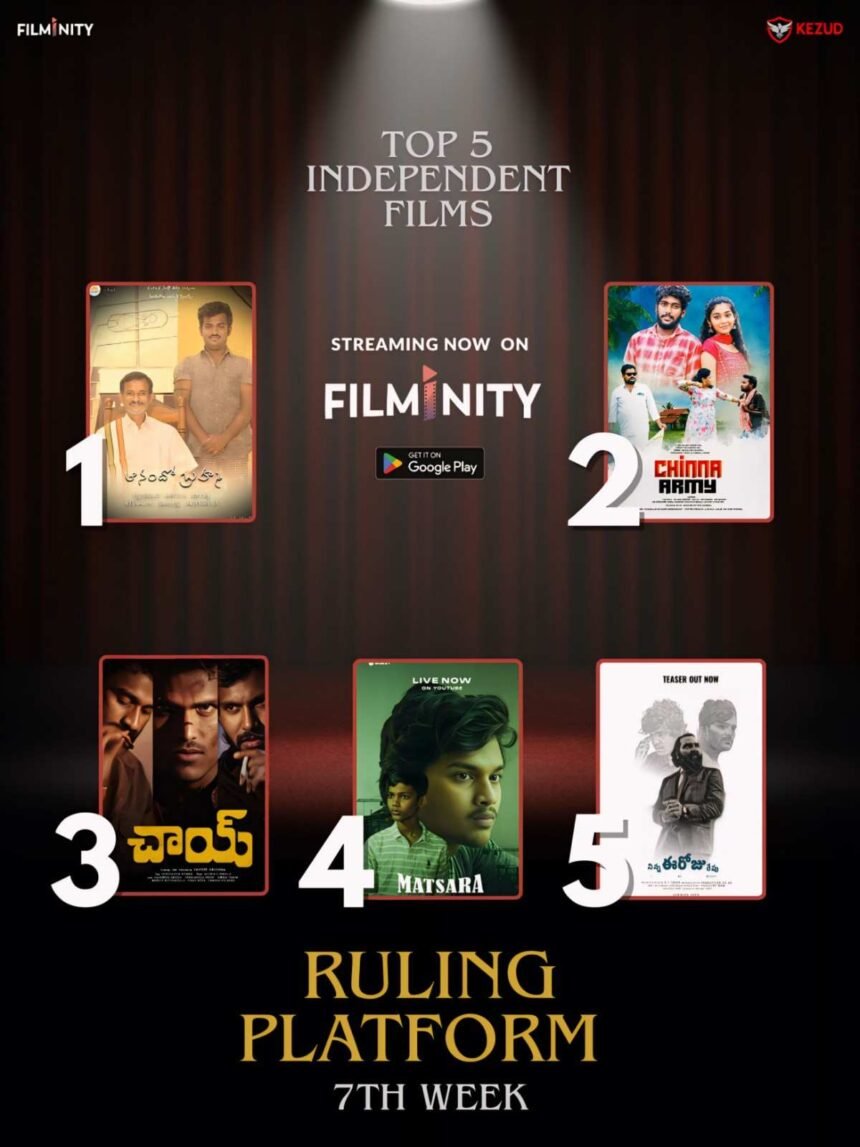
Independent cinema on Filminity OTT is not merely a showcase of untamed creativity—it is a living, evolving collective, reflecting the hopes, struggles, and souls of its creators and viewers. In week 7, five Telugu short films continue to redefine what success and impact mean for indie storytellers. With each reorder of the chart, Indian independent film makes another leap forward: from star-driven myths to works shaped by ensemble casts, technical precision, and the complex lives of everyday people.
AanandoBrahma: Nostalgia, Pedda Balasiksha, and the Art of Giving
Family, Memory, and Pedagogy
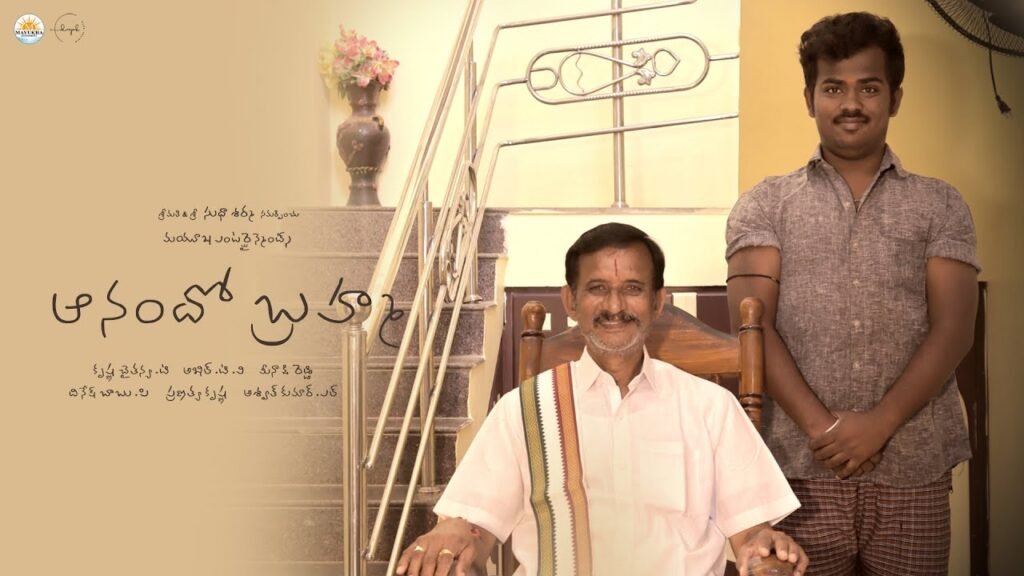
The number one film, AanandoBrahma, invites viewers into a universe of relationships—anchored in the emotional geography of Telugu towns. The film’s poetic unraveling of Pedda Balasiksha (that iconic compendium of Telugu wisdom) is not just a nostalgic device. It forms the living heart of the narrative, where each lesson is translated into lived experience and transformed by humor, sorrow, and hope.
Sri Bytinti Meenakshi Reddy’s portrayal of Aanandayya is central: his world-weariness and grace make every scene simultaneously local and universal. As Brahmaiah, Sai Kumar channels a particular innocence—an archetype now rare in modern Telugu cinema. The universe that director Krishna Chaitanya T builds is a living memory palace, rich with the sights and smells of old-school pedagogy, subtle village satire, and the ineffable essence of human connection.
Craft Behind the Scenes
The technical team deserves as much praise as the leading cast: cinematographer Akhil T V frames every moment with a warmth that recalls both childhood afternoons and bittersweet departures. Editor Pranithya Krishna orchestrates transitions as if threading a garland of emotional beats—never rushed, always purposeful. Ashwath Kumar L’s music does not announce itself, but seeps in, guiding the heart to each turning point. Lubek Lee Marvin’s dubbing and V A N Studio’s sound design ensure that not a single line is lost in translation between tradition and innovation.
Reception and Cultural Impact
Filminity audiences repeatedly comment on how AanandoBrahma compelled them to call old teachers, relive family traditions, and appreciate the deep value of education. The dialogue around the film has shifted from individual nostalgia to communal gratitude: what started as one retired teacher’s story became a shared journey for thousands of viewers seeking meaning in their own memories.
Chinna Army: Friendship, Rural Pulse, and the New Village Hero

Modernity and Tradition in Balance
Ranked second this week, Chinna Army (now spanning two parts) offers not just rural color but the emotional rhythm of contemporary Andhra villages. Devoid of sanitized sentimentality, director Mahesh Chenchali’s vision foregrounds the living rural experience—its small victories, jealousies, aspirations, and heartbreaks.
Mahesh Chenchali’s Siva stumbles, laughs, and grows before our eyes. Opposite Srikanth Sampeta’s rooted Rakhi, and through the layered presences of Swathi and Madhuri Reddy, the film’s story is never abstract—it breathes with the authenticity of everyday heroism. The result is a film where the land is more than just backdrop; it is a living, breathing character, and the ensemble cast its conscience.
The Technical Backbone
Prabhakar Sk’s cinematography honors both the lushness and the harsh realities of rural India. Editing by Vasu Ippilli is crisp yet forgiving, leaving time for the small gestures that make rural life so distinctly communal. Bhakar Appalla’s score and Allu Armk Murali’s graphic design reinforce this commitment to place and people—always suggesting a world slightly larger and more mysterious than what is visible.
Resonance with Audiences
On Filminity’s platform, the comments section is filled with self-recognition: “I see my own friends here,” “These are my childhood fights, my bond, my first romance.” Chinna Army is no mythic village but a present-day microcosm—where comic relief and struggle coexist, and where teamwork on screen mirrors that of the cast and crew who made the film.
CHAI: Short-Form Suspense and the Morality of Karma
The Power of Economy in Storytelling
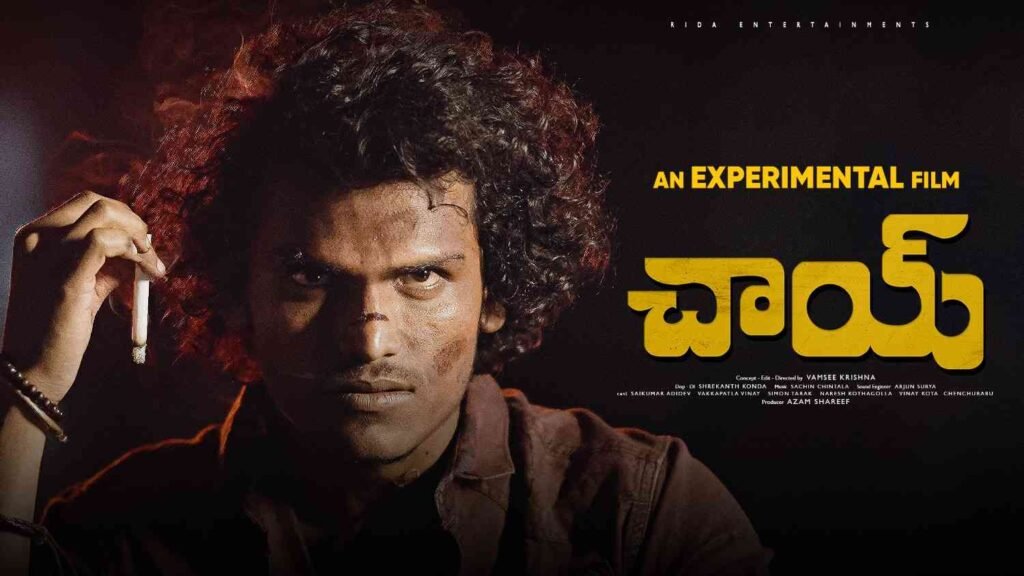
By ascending to third place this week, CHAI proves that ambition isn’t always measured by runtime. Director/editor Vamsee Krishna’s surgical approach to tension and escalation offers a lesson in brevity: every gesture, every cut, every note is in service to an almost moral fable about fate and consequence.
Saikumar Adidev’s performance is a masterclass in understated panic, skillfully abetted by Vinay Kumar, Simon Tarak, and the ensemble. The unease is palpable because the actors believe it—each movement is defined by the stakes of the story, not its scale.
Technical Precision
Shreekanth Konda’s camera work rivals the best of the indie-suspense tradition—compressed frames, lighting that feels both claustrophobic and necessary, complemented by Sachin Nani’s sparing score that stretches time with every twist. Not a second is wasted in the edit, and each technical choice, from sound layering to visual rhythm, builds relentless anticipation.
Community Conversations
Filminity’s forums and comments signal a unique kind of satisfaction: CHAI made viewers “think twice about their next impulse,” “debate what is truly fair,” and “feel the philosophical weight of karma.” Its tight structure and careful moral ambiguity sparked wider discussions about the responsibilities and repercussions inherent in every human act.
Matsara: Jealousy, Internal Wounds, and Psychological Realism
The Anatomy of Toxic Emotion
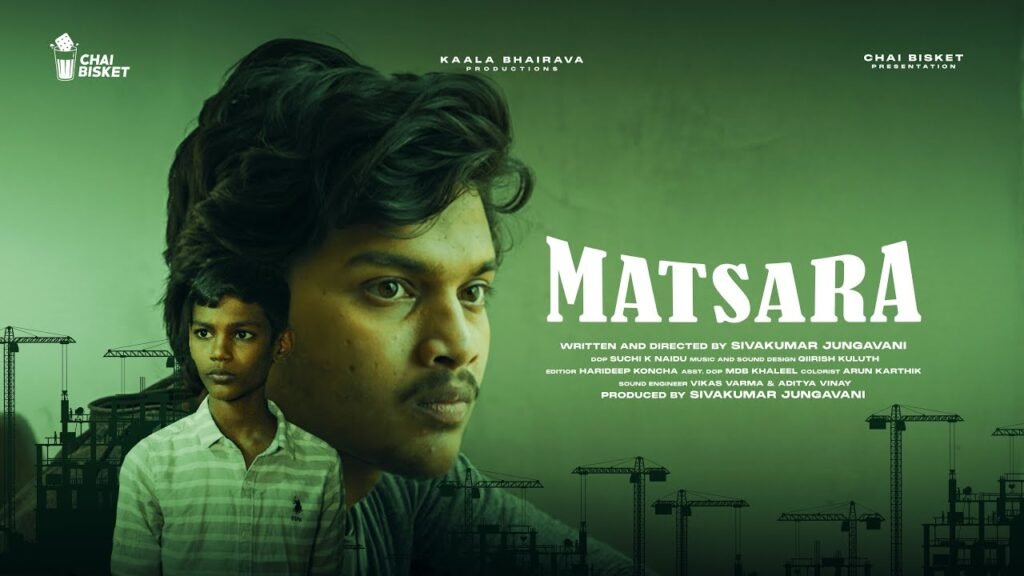
Fourth this week, Matsara may be the most psychologically daring of the pack. Starring and directed by Sivakumar Jungavani, Matsara’s unspooling of jealousy is depicted not in melodramatic flourishes but in micro-reactions, silences, and the quiet betrayals that devastate the heart over time.
The film’s supporting cast—Radhika, Sanju, Ramsingh, and others—respond rather than resist, their presence calibrating the slow disintegration of trust. Each performance is a study in emotional realism, avoiding cliché and creating a sense of intimate catastrophe.
Technical Daring
Cinematographer Suchi K Naidu employs close-ups and shadow play to create an interiority that is both suffocating and deeply revealing. Editor Harideep Koncha fragments and reconstructs the narrative, visually mirroring the internal unraveling of the protagonist. Giirish Keluth’s soundscape and Arun Karthik’s color grading wrap the film in a tension that never lets the audience feel safe.
The Broader Conversation
On Filminity, Matsara is more than a film; it is a catalyst. Viewer testimonials point to revelations about their own emotional patterns, their relationships, and the ways jealousy—discussed openly or not—shapes human experience. The film’s realism generated ongoing mental health dialogue, making Matsara an indie outlier that doubled as a mirror and map for personal exploration.
Yesterday Today Tomorrow: Experimental Structure, Mental Health, and The Fluid Self
Anthology as Empathy Machine
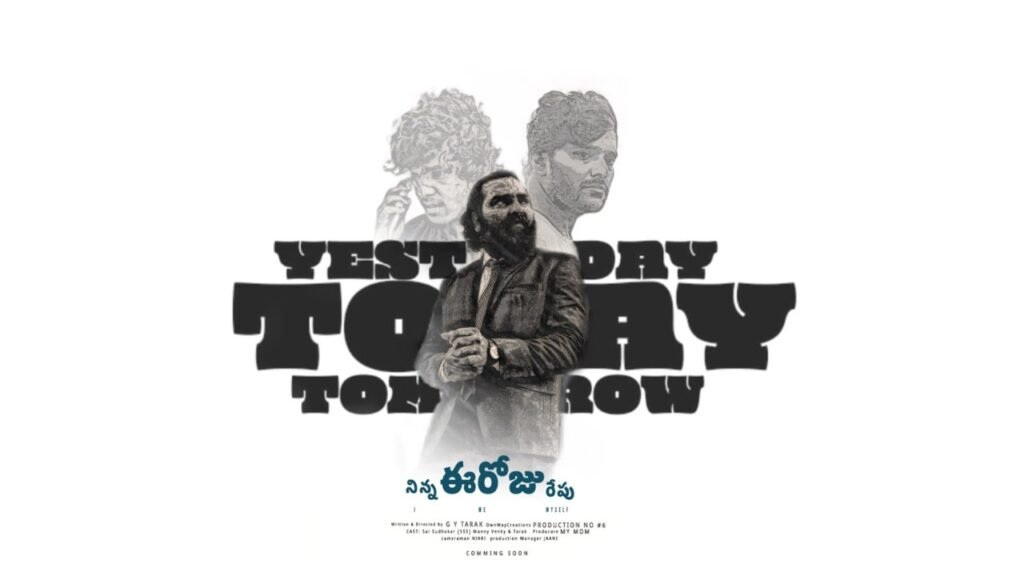
Rounding out the top five is Yesterday Today Tomorrow (I Me Myself)—a feat of experiment and empathy woven from three stories that investigate trauma, memory, and the reconstructive power of hope. Tarak’s command of both the limelight and behind-the-scenes orchestration brings emotional clarity to a narrative that could otherwise collapse under its ambition.
As Arjun, Tarak delivers a spectrum of vulnerability: confusion, anger, healing—each state distinct yet seamlessly merged. The supporting trio of Manny, Sai Sudhakar, and Venky reflect, challenge, and amplify the protagonist’s shifting identity.
Visual Storytelling
Nikki’s cinematography is both painterly and raw: shifting palettes, inventive lensing, and bold transitions make each story feel like a different state of mind. The editing, also helmed by Tarak, dares the audience to keep up as the music and color grading destabilize conventional viewing rhythms.youtube
Audience and Critical Reflection
More than any other film on the list, Yesterday Today Tomorrow drew audiences into repeat viewings—each time mining new detail, each time returning with a different interpretation. Discussions ranged from technical prowess to personal stories of trauma, identity, and healing. Filminity’s unique community structure—open reviews, instant voting, and dedicated “aftercare” threads—gave the film a long afterlife of conversation and reflection.
Platform Power: How Filminity Shapes the Conversation
Voting, Commenting, and Community Ownership
Filminity’s innovation goes beyond curating great cinema—it empowers audience ownership of taste and discovery. With week 7, the reordered top five are not chosen by a remote jury but elevated through sustained viewer interaction: likes, shares, critical comments, detailed crew spotlights, and, most crucially, robust discussion among peers.
Each film’s ascent or descent is a snapshot of collective judgment—audiences no longer just watch but actively shape the creative conversation, raising the bar for filmmakers and the platform alike.
Technical and Artistic Transparency
Detailed crew profiles on the platform demystify the creative process. From script development to sound design to poster art, Filminity OTT makes transparent the otherwise “invisible labor” of indie cinema. By featuring crew spotlights and “maker stories,” the platform elevates the back-room artistry that mainstream cinema often overlooks. This culture of technical accountability paves the way for better, more inclusive recognition of the full team behind every film’s success.
Emotional and Cultural Resonance: Why These Films Matter Now
Mirrors, Maps, and Memory
Beyond ratings or box office numbers, the resonance of week 7’s top films can be measured by the way they shape memory and prompt action. Viewers wrote about reconnecting with teachers after AanandoBrahma, reviving old friendships after Chinna Army, and having much-needed discussions about jealousy and mental health because of Matsara and Yesterday Today Tomorrow. CHAI’s moral twist found its way into family debates and online philosophy threads.
Creating a Canon for the Future
What makes this moment in Telugu independent cinema so generative is the blend of accessible themes (family, friendship, envy, resilience) with a relentless willingness to innovate at every technical and storytelling level. These films will not be tomorrow’s footnotes—they are the foundation of a new canon, with viewing guides and classroom conversations that will ripple outward for years to come.
Conclusion: Filminity and the Future of Indian Indie Film
Filminity’s week 7 charts are a testament to the vibrancy and urgency of Indian independent cinema at its most collaborative and inclusive. With each film and each creative team profiled, the platform is accelerating a renaissance—one powered by communities of viewers, makers, and critics sharing space and voice.
As independent cinema continues to break new ground—spurring dialogue, reflection, and collective celebration—Filminity promises to remain both witness and catalyst. The pulse of these films tells us not just what Indian audiences want to see, but also who they are, and who they hope to become.