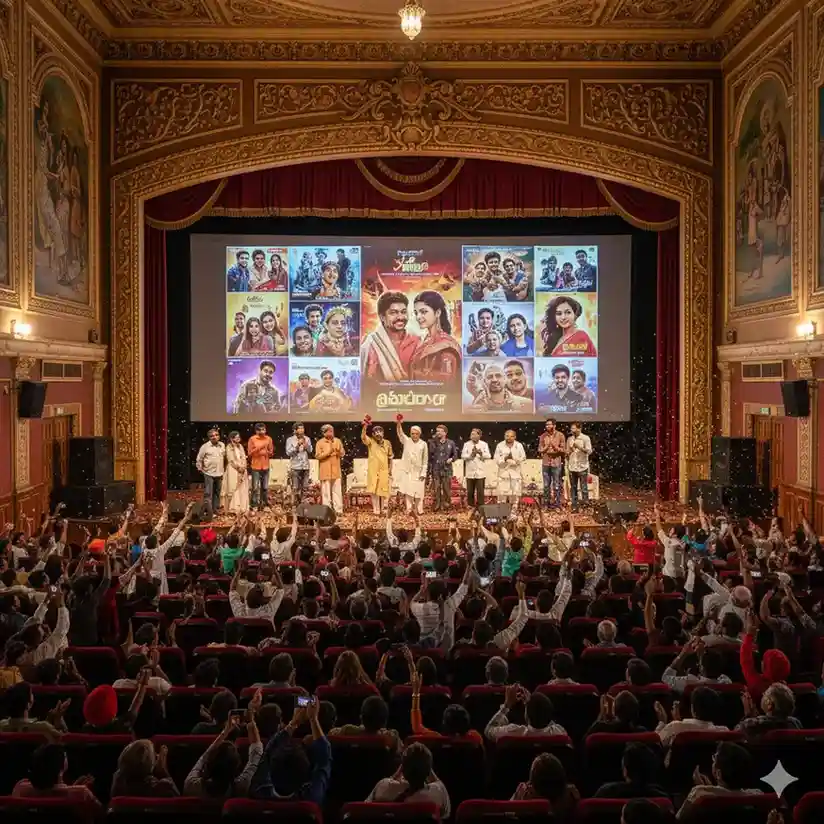
The Rise of Regional Cinema: Redefining India’s Entertainment Landscape
Indian cinema stands at a transformative crossroads in 2025, as regional film industries surge to dominance, reshaping not just box office hierarchies but also the cultural, economic, and social fabric of the nation. The dramatic ascent of Tamil, Telugu, Malayalam, Kannada, Marathi, Bengali, and more “regional” languages has transcended local boundaries, positioning these sectors as credible rivals—even leaders—to the once-hegemonic Bollywood establishment.
Market Realignment: Strong Regional Growth Overtakes Bollywood
Recent box office data lays bare this profound shift. In 2024, South Indian films commanded well over 60% of the total Indian theatrical market. Telugu films alone earned a 20% share, Tamil 15%, and Malayalam doubled its share to 10%. Kannada, Marathi, and Gujarati industries also witnessed robust growth, with Gujarati cinema registering a 66% year-on-year rise in gross collections, reflecting localized surges nationwide.
Meanwhile, Bollywood’s share fell from 44% to 40%. Significantly, most of Hindi cinema’s reported revenue has been buoyed by dubbed South Indian blockbusters rather than original productions—a notable “dubbing dividend” that blurs distinctions between regional and national hits.
Blockbusters such as “Kalki 2898 AD,” “Devara Part-1,” “Manjummel Boys,” and “Pushpa 2” have surpassed Hindi’s top titles like “Stree 2” and “Bhool Bhulaiyaa 3,” cementing the commercial and cultural clout of regional storytelling.
The OTT Revolution: Breaking Language and Geographic Barriers
One catalyst stands out: the meteoric rise of over-the-top (OTT) platforms. Platforms like Netflix, Amazon Prime, Hoichoi, Aha, and Planet Marathi have democratized film access. Regional movies with subtitles and dubbed tracks reach viewers in Delhi, Mumbai, and even global cities. According to the FICCI-EY Media & Entertainment sector report, regional movie streaming hit 54% of total Indian content in 2024, double its 2020 share.
Planet Marathi, for example, saw subscriber growth of 500%, underscoring the appetite for local-language content and the power of digital distribution.
Evolving Audience Preferences and the “Authenticity Premium”
Today’s moviegoers are more discerning and multilingual than ever. Over 72% of Indians now watch films in languages they do not speak, thanks to subtitles or dubbing. South Indian regions lead this shift, with 82% preferring subtitled content, while Hindi and Eastern states favor dubbing.
This shift reflects a deeper desire: viewers prioritize story and authenticity. The standard, glamor-driven Bollywood template has bred audience fatigue, creating space for regional films to experiment with genres, blend myth with reality, and address complex societal themes. The multiplicity of voices—each echoing unique lived experience—fuels cultural resonance and viewer loyalty.
Production Powerhouses and Technical Excellence
Regional studios have grown from local players to national, and even global, entertainment giants. Hombale Films (Kannada), Mythri Movie Makers (Telugu), and Sun Pictures (Tamil) are no longer just regional: their films “KGF,” “Pushpa 2,” “Jailer,” “Kantara,” and “Leo” have achieved nationwide success and amassed box office returns rivalling any major Bollywood banner.
Budgets have swelled as well. Telugu films like “Devara: Part 1” employ budgets of ₹350 crore, and “Kalki 2898 AD” reportedly topped ₹600 crore—far outstripping even ambitious Hindi ventures such as “Singham Again.” This scale enables technical innovation in VFX, sound design, and global marketing strategies, pushing Indian cinema’s artistic frontier outward.
Cross-industry collaborations are also increasing. Bollywood stars—including Ajay Devgn, Alia Bhatt, and Deepika Padukone—headline regional projects, while South actresses like Rashmika Mandanna and Nayanthara debut in Hindi films. Such fluidity dilutes the “regional vs national” binary.
Socio-Cultural Impact: Pluralism and Representation
The rise of regional cinema is more than a business story; it is a cultural renaissance. These films represent linguistic diversity, preserve heritage, and bring under-represented communities into the cinematic mainstream. Thematically, regional content explores socio-political realities, mythology, and local contexts with greater nuance than many mainstream Hindi releases.
Smaller films like “Manjummel Boys” (Malayalam), made for ₹20 crore but grossing ₹170 crore, exemplify how grassroots stories, authentic settings and relatable characters drive both commercial and critical success. Regional filmmakers are thus redefining what counts as a “hit,” focusing on narrative strength rather than sheer spectacle or star power.
Government Policy and Industry Support
Central and state governments have responded with new subsidies, grants, and infrastructural investment. Film tourism policies (e.g., in Madhya Pradesh, Maharashtra, Kerala) offer up to ₹10 crore for international or local-language projects. These measures encourage smaller studios and independent filmmakers to pursue regional stories without prohibitive financial risk.
Efforts to expand the physical infrastructure—new theaters in Tier-2 and Tier-3 cities, increased subsidy availability, and state-sponsored film festivals—are further democratizing the industry, ensuring wide access to diverse cinematic offerings.
Box Office Earnings and Economic Ramifications
Gross box office collections, inclusive of entertainment and GST taxes, provide a clear indicator of sectoral health. In the January-October 2024 period, six out of India’s top ten grossing films were regional, based on objective revenue—not just net profits adjusted for costs, star value, or promotions.
Importantly, such success translates to higher profit margins for local studios, producers, and distributors, especially when films are made on modest budgets. Audiences now judge cinema on storytelling craft, not scale alone—providing a path for independent voices to thrive in the commercial arena.
The Pandemic: Challenges and Resilience
The COVID-19 pandemic nearly crippled Indian cinema, with a 72% drop in box office revenue in 2020. Yet regional industries adapted rapidly, shifting to OTT-first distribution and employing virtual production techniques. Closure of theaters forced content online, introducing new viewer habits, and broadening consumption beyond urban hubs.
As a result, regional content became the lifeline for many platforms, propelling viewership and reconciling lost revenue through digital monetization—an evolution that may keep accelerating even as cinemas reopen post-pandemic.
Bollywood’s Response: Collaboration and Change
Faced with an ascendant regional sector, Bollywood has moved to collaborate and adapt. Major production houses like Dharma Productions, Purple Pebble Pictures, and T-Series are now investing in Marathi, Tamil, Punjabi, and Assamese cinema. Bollywood’s stars and directors often remake or partner on projects originating in the South and elsewhere, reflecting a new openness to linguistic and cultural diversity.
This collaborative shift underpins both commercial imperative and creative renewal, blurring historical boundaries and allowing “Indian cinema” to present a unified front at home and abroad.
Key Challenges: The Roadblocks Ahead
Despite impressive gains, regional cinema faces significant challenges:
- Funding Gaps: Independent creators often struggle for financing, with big studios dominating investment flows.
- Distribution Bottlenecks: Multiplexes prioritize big Bollywood or Hollywood releases, crowding out regional films and constraining access.
- Piracy Threat: Smaller marketing budgets and tight margins leave regional productions especially vulnerable.
- Demographic Shifts: Multiplexes serve a growing urban premium audience, while closure of single-screen theaters limits rural reach.
- Policy Implementation: While subsidies and grants exist, bureaucratic delays and uneven execution impede their full potential.
Industry leaders call for streamlined funding, piracy protection, expanded screen access, and more equitable revenue-sharing models. Many advocate for “OTT-first” strategies, allowing for wider and more democratic reach.
Audience Dynamics: Slice-of-Life and Socially Relevant Stories
Contemporary consumer behavior reveals a preference for “slice of life” films and those probing deep socio-political themes. Unlike the formulaic big-budget Hindi offerings, regional movies provide variety, authenticity, and relatability.
Dubbing into multiple languages and accessible OTT distribution fosters deeper acceptance and repeat viewing. Latest trends suggest audiences are less swayed by scale or star power, placing content and storytelling at the apex of their valuation.
Future Horizons: Towards a Unified Indian Cinema
Forecasts predict that India’s entertainment and media market will reach USD 48 billion by 2030, with regional cinema as its primary growth driver. OTT platforms will double their investments in regional programming, accentuating demand for local stories.
Multilingual and global productions will become common, blending talent and reaching audiences in Southeast Asia, North America, and Europe. The “authenticity premium” will drive international reputation, repositioning India’s cinematic identity.
Cross-industry collaborations, actors crossing language lines, and state policies supporting diverse story-telling will ensure continued, inclusive development of the sector.
Conclusion: Regional Cinema as the Main Stage
The meteoric rise of regional cinema reshapes India’s entertainment sphere, not as an “alternative” but as the main stage. Box office trends, digital migration, and evolving audience preferences all point toward a more pluralistic, innovative, and representative Indian national cinema.
Challenges persist: distribution bottlenecks, funding gaps, piracy threats, and the urban-rural divide. Yet the industry’s resilience, adaptation to digital paradigms, and creative energy provide hopeful signs. Regional voices now define the pulse of Indian cinema, promising not just greater inclusivity at home but global resonance for decades to come.
As the market continues its dynamic evolution, filmmakers, producers, and viewers all stand on the threshold of a brighter, more balanced, and culturally rich future—one driven by the diverse sounds, sights, and stories of India’s many regions.